 正版
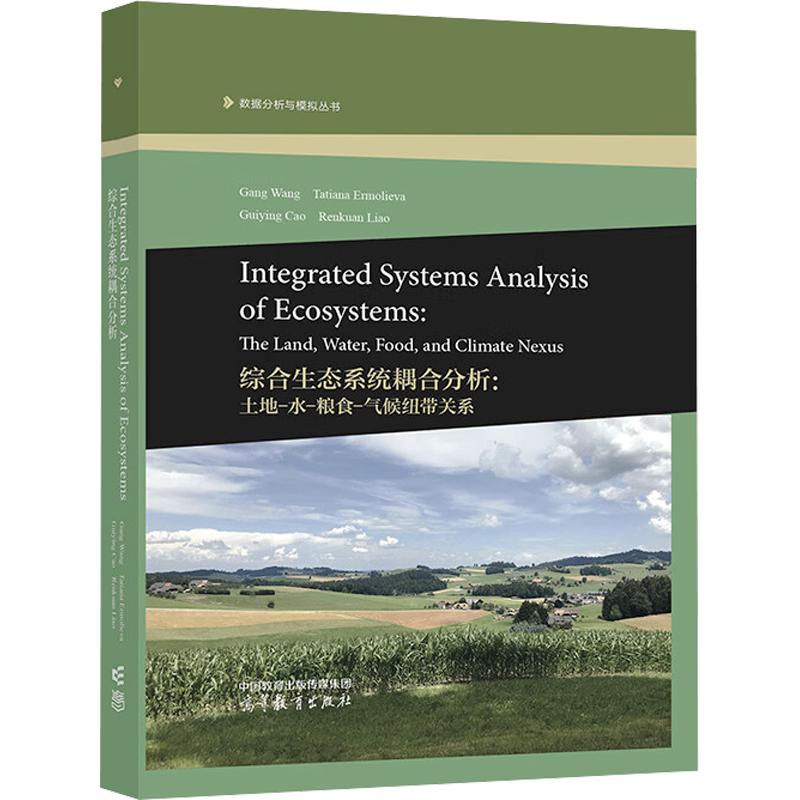
综合生态系统耦合分析:土地-水-粮食-气候纽带关系(英文版)INTEGRATED
- 书名
- 综合生态系统耦合分析:土地-水-粮食-气候纽带关系(英文版)INTEGRATED
- 作者
- 王钢 等 主编
- 出版社
- 高等教育出版社
- 出版时间
- 2026-08-01
- ISBN
- 9787040666410
- 货号
- 1204476338
- 品相
- 全新
- 分类
- 当代·科技
- 书名
- 综合生态系统耦合分析:土地-水-粮食-气候纽带关系(英文版)INTEGRATED
- 作者
- 王钢 等 主编
- 出版社
- 高等教育出版社
- 出版时间
- 2026-08-01
- ISBN
- 9787040666410
- 货号
- 1204476338
- 品相
- 全新
- 分类
- 当代·科技
目录▼
List of contributors
Part I Integrated biophysical, socioeconomic, land use, ecosystem models, and case studies
1. Introduction for Part I
2. The GAEZ model and application
2.1 Introduction
2.2 Data and methods
2.3 Results and discussions
2.4 Conclusion
References
3. Water resources modeling and applications
3.1 Introduction
3.2 Tools and approaches
3.3 Selected applications and case studies
3.4 Future perspectives
References
4. The Soil–Plant–Atmosphere Continuum Model and application
4.1 Introduction
4.2 Detailed description of Simultaneous Heat–Water–Salt and Crop and the related modifications
4.3 Model testing and application
4.4 Results and discussion
4.5 Summary and conclusion
References
5. The Global Biosphere Management Model and application
5.1 Introduction
5.2 Emergence of systemic risks under security targets
5.3 Numerical results
5.4 Concluding remarks
Appendix 1
References
6. Water-Energy-Food-Environmental Nexus Model and application
6.1 Water–energy–food–environmental nexus model in coal mining region
6.2 Modeling of relationships between environmental, food, and economic dimensions
6.3 Conclusion
References
Part II Biophysical process-oriented modeling and applications
7. Introduction for Part II
8. Biophysical models for soil microbial interactions and application
8.1 A hydration-based biophysical index for the onset of soil microbial coexistence
8.2 A biophysical model to predict how hydration dynamics promote bacterial coexistence on rough surfaces
References
9. Soil biophysical modeling across scales
9.1 Introduction
9.2 Traditional models assuming well-mixed conditions
9.3 Emergent models accounting for heterogeneities
9.4 Outlook
References
10. Nature-based solutions: Brazils key to net-zero emissions by 2050
10.1 Introduction
10.2 Methods
10.3 Results
10.4 Discussion
10.5 Conclusion
References
11. PEPIC: a tool for revealing global crop–water–environment relations
11.1 Introduction
11.2 The EPIC and PEPIC models
11.3 Model applications
11.4 Discussion
11.5 Conclusion
References
12. Robust crop yield metamodel for predicting crop yield probability distributions
12.1 Introduction
12.2 Crop yield analysis
12.3 Biophysical and statistical crop yield models
12.4 Robust statistical estimation and machine learning approaches
12.5 Selected results
12.6 Conclusion
References
13. Integrated modeling approach for coping with agricultural pollution
13.1 Introduction
13.2 Methodological backgrounds
13.3 China case study
13.4 Nitrogen accounting approach
13.5 Development of risk functions to minimize environmental effects
13.6 Alternative scenarios of agricultural practice based on risk indicators
13.7 Conclusion
References
14. A systems modeling approach for invasive alien plant management and decision-making
14.1 Introduction
14.2 Systems thinking
14.3 Study area
14.4 Methods
14.5 Results
14.6 Discussion
14.7 Conclusion
References
15. Risk reduction in sustainable food systems: a balancing act
15.1 Introduction
15.2 Environmental protection of Lake Erie
15.3 Discussion and outlook
References
16. Connections between robust statistical estimation, robust decision making with two-stage stochastic optimization, and robust machine learning problems
16.1 Introduction
16.2 Connections and new problems of statistics and stochastic optimization
16.3 Problems with small samples and high dimensions of θ
16.4 Solution procedures: SQG methods for robust machine learning
References
Index
文摘▼
《综合生态系统耦合分析:土地-水-粮食-气候纽带关系》打破学科边界,聚焦土壤科学、水文学、经济学、生态学、农艺学与环境科学之间的交叉领域,梳理了生态学与农业生态学前沿模型领域的重大研究进展,并阐述各类模型在多时空尺度下的应用价值与指导意义。全书分为两大部分,第一部分(第1—6章)整合生物物理、社会经济、土地利用等多种模型;第二部分(第7—16章)聚焦面向生物物理过程的建模及应用,涵盖土壤微生态、农业污染、外来植物管控、粮食系统风险与机器学习等方向,介绍各类前沿模型、算法、实例及优化方案,提供多时空尺度生态综合分析方法。本书适合农学、生态学、生物学、土壤学及相关学科的高校师生及科研人员阅读参考。