 正版
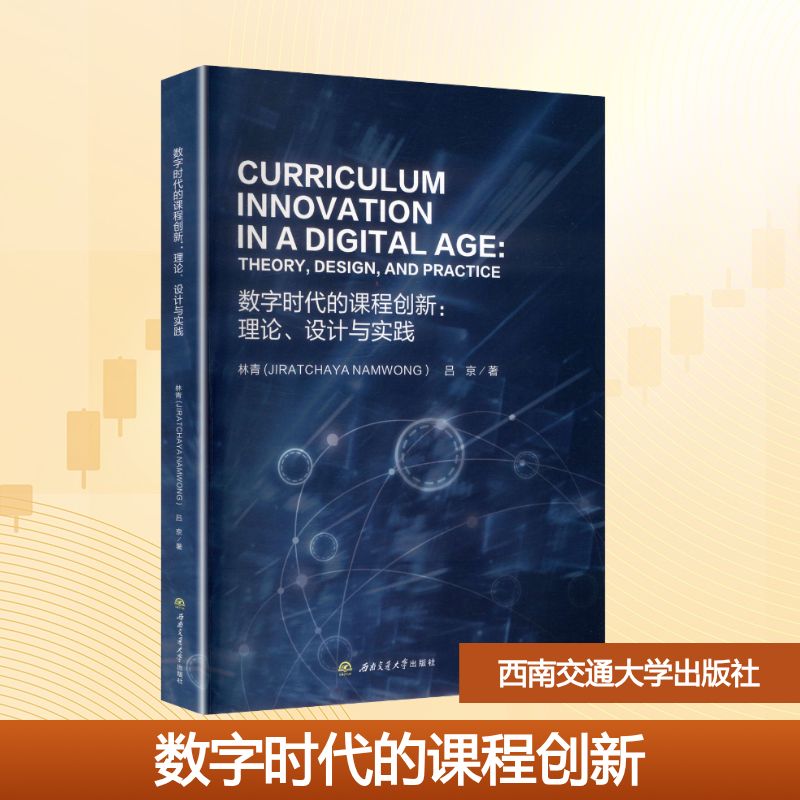
CURRICULUM INNOVATION IN A DIGITAL AGE:THEORY,DESIGN,AND PRACTICE 数字时代的课程创新:理论、设计与实践
- 书名
- CURRICULUM INNOVATION IN A DIGITAL AGE:THEORY,DESIGN,AND PRACTICE 数字时代的课程创新:理论、设计与实践
- 作者
- 林青,吕京 著
- 出版社
- 西南交通大学出版社
- 出版时间
- 2025-11-01
- ISBN
- 9787577408002
- 货号
- 1204258722
- 品相
- 全新
- 分类
- 当代·艺术
- 书名
- CURRICULUM INNOVATION IN A DIGITAL AGE:THEORY,DESIGN,AND PRACTICE 数字时代的课程创新:理论、设计与实践
- 作者
- 林青,吕京 著
- 出版社
- 西南交通大学出版社
- 出版时间
- 2025-11-01
- ISBN
- 9787577408002
- 货号
- 1204258722
- 品相
- 全新
- 分类
- 当代·艺术
作者简介▼
林青,泰籍,四川师范大学课程与教学论专业博士研究生、四川师范大学全球治理与区域国别研究院研究员、成都大学外国语学院泰语系外籍教师、教育部国别与区域研究备案中心——成都大学泰国研究中心研究员,同时担任成都大学泰语教育与文化交流中心副主任。曾于泰国孔敬大学教育学院担任汉语国际教育助教,并在泰王国驻成都总领事馆商务处任项目负责人。曾获成都大学“2023年第四届最受学生欢迎教师奖”及“2025年第二届最美教师奖”。主持省级科研项目5项,在国内外学术期刊发表论文12篇,出版译著1部教材1部及专著3部。研究方向:学科课程与教学、区域国别研究(东南亚)。
吕京,华东师范大学与美国宾夕法尼亚大学联合培养博士,四川师范大学教授、博士生导师,泰国东南亚大学博士生导师、澳门城市大学研究生导师。主持省部级以上科研项目11项,在《中国教育学刊》《人民日报》《中国教育报》《中国高教研究》《中国高等教育》《全球教育展望》《国外理论动态》等刊物发表论文80余篇,出版著作及教材9部。研究成果获省部级以上采纳或肯定性批示12项、四川省社会科学优秀成果奖三等奖1项。研究方向:学科课程与教学、区域国别研究(东南亚、非洲之角)。
目录▼
Introduction 001
0.1 Overview of the Digital Age and Its Impact on Education 002
0.2 The Need for Curriculum Innovation 013
0.3 The Purpose and Scope of This Book 025
Part I Foundations of Curriculum Innovation in a Digital Age
Chapter 1 Understanding Curriculum in the Digital Context 036
1.1 Defining Curriculum Innovation 043
1.2 Historical Perspectives on Curriculum Development 054
1.3 The Role of Technology in Curriculum Transformation 061
Chapter 2 Theoretical Frameworks for Digital Curriculum Design 067
2.1 Learning Theories in the Digital Era 077
2.2 Constructivism and Connectivism Approaches in Education 080
2.3 Cognitive Load Theory and Technology Integration 094
Chapter 3 Global Perspectives on Curriculum Innovation 103
3.1 Digital Education Reform: Case Studies from Around the World 120
3.2 Lessons Learned from Different Educational Systems 138
3.3 International Policy Directions for Digital Curriculum 144
Part II Designing a Digitally Enhanced Curriculum
Chapter 4 Principles of Digital Curriculum Design 163
4.1 Key Elements of a Digital Curriculum 171
4.2 Aligning Learning Objectives with Digital Tools 178
4.3 Designing for Flexibility, Adaptability, and Inclusion 183
Chapter 5 Digital Pedagogy and instructional Design 189
5.1 The Role of Digital Pedagogies in Modern Learning 193
5.2 Integrating Technology into Teaching Practices 199
5.3 The Relationship Between Technology, Teachers, and Learners 205
Chapter 6 Assessment and Evaluation in Digital Learning Environments 211
6.1 Rethinking Assessment in the Digital Age 214
6.2 Digital Tools for Formative and Summative Assessments 222
6.3 Data-Driven Decision-Making (DDDM) in Curriculum Evaluation 228
Part III Practical Applications and Case Studies
Chapter 7 Implementing Digital Curriculum in Schools 242
7.1 Steps to Effective Curriculum Reform 245
7.2 Teacher Professional Development for Digital Curriculum 250
7.3 Overcoming Challenges in Digital Integration 255
Chapter 8 Digital Curriculum for Higher Education 265
8.1 Case Studies from Universities Adopting Digital Curriculum 270
8.2 Blended and Online Learning Models 274
8.3 Innovation in Higher Education Delivery and Assessment 278
Chapter 9 Digital Curriculum in Lifelong Learning 284
9.1 Designing Digital Programs for Adult and Continuing Education 290
9.2 The Role of Digital Platforms in Skills Training and Upskilling 295
9.3 Ensuring Access and Equity in Lifelong Learning 301
Part IV Future Trends and Innovations in Digital Curriculum
Chapter 10 Emerging Technologies and Their Impact on Education 314
10.1 Artificial Intelligence and Personalized Learning 321
10.2 Augmented and Virtual Reality in Education 322
10.3 The Role of Big Data and Learning Analytics 322
Chapter 11 Policy and Governance in the Digital Curriculum Era 323
11.1 Navigating Digital Curriculum Policy at the National and International Levels 328
11.2 Legal and Ethical Considerations in Digital Learning 328
11.3 Future Policy Directions for Digital Curriculum Implementation 329
Chapter 12 The Future of Curriculum Innovation 330
12.1 Predicting Trends in Education Technology 333
12.2 Sustainability and Scalability of Digital Innovations 334
12.3 Building Resilience in Curriculum Design for the Future 334
Chapter 13 Conclusion 335
13.1 Recap of Key Insights on Digital Curriculum Innovation 347
13.2 Final Reflections on the Future of Education 347
Appendices 348
References 349
Suggested Readings 358
文摘▼
《数字时代的课程创新:理论、设计与实践》是一部系统探讨数字时代课程创新的综合性著作。作者结合自身跨文化学术背景,从理论、设计与实践三个维度,全面分析了数字技术对教育的深远影响以及课程创新的必要性与路径。
书中第一部分“数字时代课程创新的基础”从历史、理论和全球视角出发,探讨了数字技术如何重塑课程设计与教学实践。作者回顾了课程发展的历史脉络,分析了技术在课程转型中的关键作用,并结合全球案例,揭示了不同教育体系在数字化改革中的经验与挑战。
第二部分“设计数字化增强型课程”聚焦于课程设计的原则与实践。作者提出了数字化课程设计的核心要素,强调将学习目标与数字工具有效结合,同时关注课程的灵活性、适应性和包容性。此外,书中还探讨了数字教学法、技术与师生互动的关系,以及数字化学习环境中的评估与反馈机制,为实践者提供了切实可行的指导。
第三部分“实际应用与案例研究”通过具体案例展示了数字课程在基础教育、高等教育和终身学习中的实施路径。从学校层面的课程改革到大学的混合式教学模式,再到成人教育中的数字技能培养,作者展现了数字化课程在不同教育阶段的广泛应用与创新实践。
第四部分“数字课程的未来趋势与创新”展望了新兴技术(如人工智能、虚拟现实和大数据)对教育的深远影响,并探讨了政策与治理在数字化课程改革中的作用。作者强调,课程创新不仅需要技术驱动,还需要考虑文化适应性和制度敏感性,以确保数字化改革在不同地区和文化背景下的可持续性。
全书以跨文化视角为特色,既注重理论深度,又强调实践指导,为教育工作者、政策制定者及研究者提供了丰富的学术资源与实践参考。