 正版
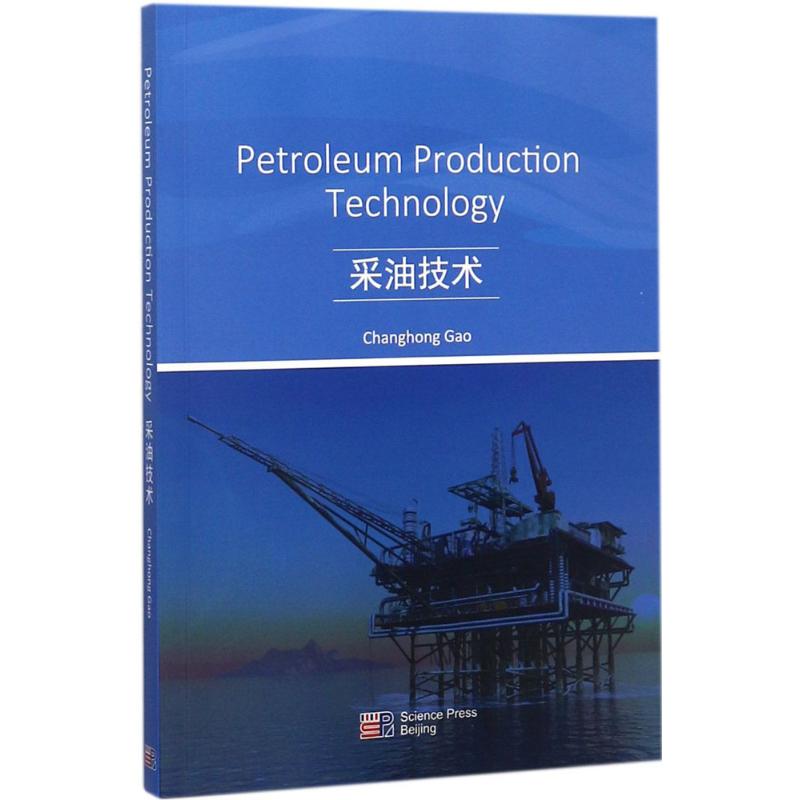
采油技术
- 书名
- 采油技术
- 作者
- 高长虹 编
- 出版社
- 科学出版社
- 出版时间
- 2018-08-01
- ISBN
- 9787030572103
- 货号
- 1201726515
- 品相
- 全新
- 分类
- 当代·工业
- 书名
- 采油技术
- 作者
- 高长虹 编
- 出版社
- 科学出版社
- 出版时间
- 2018-08-01
- ISBN
- 9787030572103
- 货号
- 1201726515
- 品相
- 全新
- 分类
- 当代·工业
作者简介▼
Changhong Gao received his degrees in petroleum engineering from China University of Petroleum, University of Tulsa and Curtin University. He worked for Sinopec as a field engineer and research engineer. He also taught at United Arab Emirates University, University of Aberdeen and Petroleum Institute of Abu Dhabi.
In 2013, he was elected Taishan Scholar by Shandong province government, as well as Yellow River Delta Scholar by Dongying city government. His teaching and research interests include drilling mud, production system design and enhanced oil recovery. He has published more than 30 journal papers and presented a few papers at SPE and APPEA conferences.
目录▼
Preface
Chapter 1 Properties of Oil and Gas 1
1.1 Phase behavior 2
1.2 Properties of natural gas 5
1.2.1 Gas equation of state 6
1.2.2 Gas compressibility 9
1.2.3 Gas formation volume factor 10
1.2.4 Gas viscosity 10
1.3 Properties of crude oil 12
1.3.1 Oil density 12
1.3.2 Solution gas oil ratio 13
1.3.3 Oil formation volume factor 14
1.3.4 Oil viscosity 16
1.4 Fluid sampling 17
Chapter 2 Properties of Reservoir Rock 20
2.1 Basic petroleum geology 20
2.2 Porosity 22
2.3 Absolute permeability 24
2.4 Fluid Saturation 29
2.5 Surface tension and interfa tension 30
2.6 Wettability 30
2.7 Capillary action 33
2.8 Capillary pressure 34
2.9 Relative permeability 39
2.10 Electrical conductivity 43
2.11 Rock sampling 44
Chapter 3 Reservoir Recovery Mechanisms 48
3.1 Field life cycle 48
3.2 Primary recovery mechanisms 50
3.2.1 Rock and liquid expansion drive 50
3.2.2 Solution gas drive 50
3.2.3 Gas cap drive 51
3.2.4 Aquifer drive 53
3.2.5 Combination drive 54
3.3 Secondary recovery methods 55
3.4 Enhanced oil recovery 62
3.4.1 Thermal methods 62
3.4.2 Miscible gas flood 63
3.4.3 Chemical methods 66
Chapter 4 Fluid Flow in Reservoir 71
4.1 Basic concepts 71
4.2 Basic diffusivity equation 72
4.3 Linear flow under steady state 75
4.3.1 Steady-state linear flow of incompressible fluid 75
4.3.2 Steady-state linear flow of slightly compressible fluid 76
4.3.3 Steady-state linear flow of compressible gases 77
4.4 Radial flow under steady state 80
4.4.1 Steady-state radial flow of incompressible fluid under 80
4.4.2 Steady-state radial flow of compressible gases 84
4.5 Fluid flow under pseudo-steady state 86
Chapter 5 Drilling and Production Facilities 90
5.1 Drilling rigs 90
5.2 Drilling systems 93
5.2.1 Rotary drive and top drive 93
5.2.2 Drill string 95
5.2.3 Mud circulation 97
5.2.4 Blowout preventer 97
5.2.5 Casing program 98
5.3 Offshore production structures 100
Chapter 6 Well Completion 108
6.1 Lower completion 108
6.1.1 Open-hole completion 108
6.1.2 Cased-hole completion 112
6.1.3 Choice of lower completion 112
6.1.4 Cementing a cased well 113
6.1.5 Perforating a cased well 118
6.2 Upper completion 122
6.2.1 Options for upper completion 122
6.2.2 Christmas tree and tubing hanger 124
6.2.3 Safety valve 127
6.2.4 Production packer 129
6.2.5 Smart completion 130
Chapter 7 Well Inflow Performance 132
7.1 Well productivity index 132
7.2 Vogel IPR 133
7.3 Fetkovich IPR 140
7.4 Productivity of Horizontal Wells 141
Chapter 8 Fluid Flow in Wells and Nodal Analysis 147
8.1 Single-phase flow in pipes 147
8.2 Multiphase flow concept 150
8.3 Multiphase flow models 155
8.4 Tubing performance relationship 161
8.5 Nodal analysis for production system 163
Chapter 9 Artifi Lift Methods 167
9.1 Sucker rod pump 167
9.2 Gas lift 172
9.2.1 Gas lift system 172
9.2.2 Well unloading and kick-off 174
9.3 Electrical submersible pump 179
9.4 Other artifi lift methods 182
9.5 Discussions 186
Chapter 10 Acidizing and Fracturing 187
10.1 Formation damage and skin factor 187
10.2 Fracturing 190
10.2.1 Fracture pressure 190
10.2.2 Fracturing fluid and proppants 192
10.2.3 Models of fracture geometry 193
10.3 Matrix acidizing 195
Chapter 11 Sand Control 199
11.1 Grain size distribution 199
11.2 Gravel pack 202
11.3 Screens 203
11.3.1 Wire-wrapped screens 203
11.3.2 Premium screens 205
11.3.3 Pre-packed screens 206
11.3.4 Expandable screens 207
Chapter 12 Flow Assurance 211
12.1 Scale 211
12.2 Waxes 213
12.3 Asphaltenes 216
12.4 Hydrates 218
12.4.1 Types of hydrates 219
12.4.2 Hydrate prevention 222
12.4.3 Removal of hydrate plug 224
Chapter 13 Separation and Treatment 226
13.1 Separator configurations 226
13.2 Theories of separation 231
13.2.1 Terminal velocity 231
13.2.2 Gas capacity constraint 232
13.2.3 Retention time requirement 233
13.2.4 Oil pad thickness 234
13.2.5 Water phase thickness 235
13.2.6 Slenderness ratio 236
13.3 Separator sizing 236
13.4 Gas treatment 237
13.4.1 Gas dehydration 237
13.4.2 Gas compression 239
13.4.3 Downstream gas processing 240
13.5 Oil dehydration 241
13.6 Water treatment 241
Main References 243
Appendix A 245
文摘▼
本书介绍了采油技术的整个工业流程,包括油气和岩石物性、油藏采收率原理、完井工艺、油气流入动态、管流特点和计算、人工举升、酸化压裂、防砂技术、采油技术难题、以及油气分离的原理和设计,读者可以通过本书,掌握从油藏到井筒,再到地面的采油关键技术,是目前很完整很核心的采油技术参考书。